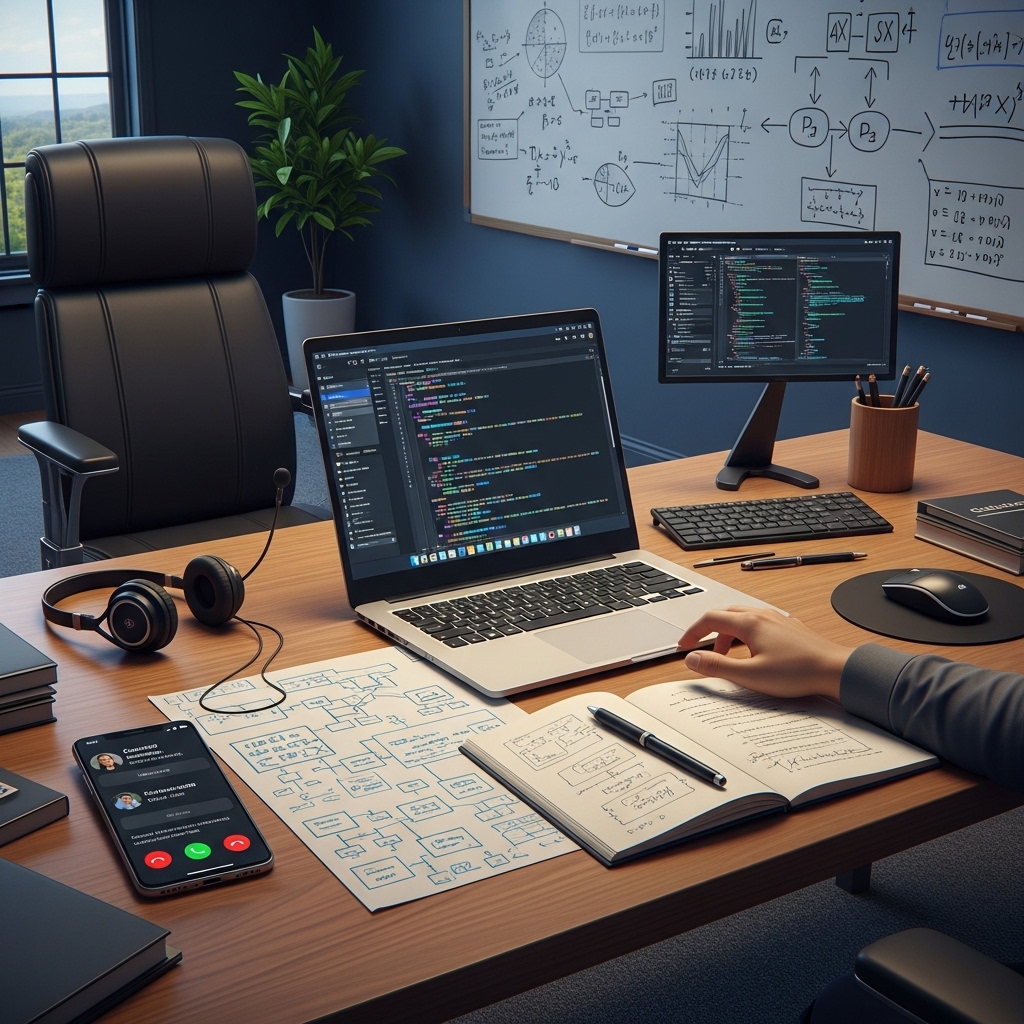
Create a highly detailed, digitally rendered concept art scene of "7. The Workspace" set in a modern, sleek office environment, characteristic of en-US architectural aesthetics. The room is illuminated by dramatic, softbox lighting, accentuating the textures and contours of the space. In the center of the scene, a sturdy, dark-wooden desk sits atop a plush, low-pile carpet, its surface reflecting the subtle glow of the laptop's screen, which displays a prominent coding interface with lines of code streaming down the screen as the user types away, their fingers flying across the backlit keyboard. The laptop, positioned at a 45-degree angle, is flanked by a wireless mouse to its right and a notebook filled with handwritten notes and sketches of complex systems, flowcharts, and to-do lists, highlighting the user's work process, with a pen resting against the edge of the desk, poised to jot down a crucial note. To the left of the laptop, a smartphone lies on the desk, its screen glowing with an incoming call notification from a client, with the caller's name and company logo visible on the screen, emphasizing the importance of the call. The phone's screen displays a photo of the caller, a business professional with a friendly smile, and the call details, including the caller's title, company, and a brief summary of the call's purpose, all of which underscore the significance of the call. A headset rests on the chair's armrest, ready for the user to take the call, with a microphone and earpiece at the ready. Behind the desk, a high-backed, ergonomic chair is pushed back, as if the user has just stood up to stretch or pace around the room while on a call, with a whiteboard on the wall to the right of the desk filled with equations, diagrams, and notes, showcasing the user's work in progress, including a prominent project management dashboard, a coding interface, and a document filled with technical writing. The whiteboard is divided into sections, each dedicated to a different aspect of the user's work, including a section for brainstorming, a section for outlining, and a section for tracking progress. The walls of the office are painted a soothing, light gray color, and the floor-to-ceiling window behind the desk allows natural light to pour in, casting a warm glow on the space, where a bookshelf in the background is filled with technical books, industry publications, and awards, highlighting the user's expertise and accomplishments in their field, including a few bestseller books on programming, software development, and entrepreneurship. The bookshelf is adorned with framed certificates, diplomas, and recognition awards, all of which attest to the user's hard work and dedication to their craft. In the background, the cityscape outside the window is visible, with towering skyscrapers and bustling streets, emphasizing the urban, professional setting of the workspace, where a cup of coffee and a notebook with a to-do list remind the user of their tasks and deadlines, while a calendar on the wall displays a busy schedule of meetings and calls, underscoring the importance of time management in the user's work. The overall atmosphere of the scene is one of focused productivity, as if the user is deeply engaged in their work, typing away on their keyboard, preparing to take an important call, and managing their workload with precision and dedication, with a sense of urgency and purpose that drives them to deliver high-quality results.
Create a highly detailed, digitally rendered concept art scene of "7. The Workspace" set in a modern, sleek office environment, characteristic of en-US architectural aesthetics. The room is illuminated by dramatic, softbox lighting, accentuating the textures and contours of the space. In the center of the scene, a sturdy, dark-wooden desk sits atop a plush, low-pile carpet, its surface reflecting the subtle glow of the laptop's screen, which displays a prominent coding interface with lines of code streaming down the screen as the user types away, their fingers flying across the backlit keyboard. The laptop, positioned at a 45-degree angle, is flanked by a wireless mouse to its right and a notebook filled with handwritten notes and sketches of complex systems, flowcharts, and to-do lists, highlighting the user's work process, with a pen resting against the edge of the desk, poised to jot down a crucial note. To the left of the laptop, a smartphone lies on the desk, its screen glowing with an incoming call notification from a client, with the caller's name and company logo visible on the screen, emphasizing the importance of the call. The phone's screen displays a photo of the caller, a business professional with a friendly smile, and the call details, including the caller's title, company, and a brief summary of the call's purpose, all of which underscore the significance of the call. A headset rests on the chair's armrest, ready for the user to take the call, with a microphone and earpiece at the ready. Behind the desk, a high-backed, ergonomic chair is pushed back, as if the user has just stood up to stretch or pace around the room while on a call, with a whiteboard on the wall to the right of the desk filled with equations, diagrams, and notes, showcasing the user's work in progress, including a prominent project management dashboard, a coding interface, and a document filled with technical writing. The whiteboard is divided into sections, each dedicated to a different aspect of the user's work, including a section for brainstorming, a section for outlining, and a section for tracking progress. The walls of the office are painted a soothing, light gray color, and the floor-to-ceiling window behind the desk allows natural light to pour in, casting a warm glow on the space, where a bookshelf in the background is filled with technical books, industry publications, and awards, highlighting the user's expertise and accomplishments in their field, including a few bestseller books on programming, software development, and entrepreneurship. The bookshelf is adorned with framed certificates, diplomas, and recognition awards, all of which attest to the user's hard work and dedication to their craft. In the background, the cityscape outside the window is visible, with towering skyscrapers and bustling streets, emphasizing the urban, professional setting of the workspace, where a cup of coffee and a notebook with a to-do list remind the user of their tasks and deadlines, while a calendar on the wall displays a busy schedule of meetings and calls, underscoring the importance of time management in the user's work. The overall atmosphere of the scene is one of focused productivity, as if the user is deeply engaged in their work, typing away on their keyboard, preparing to take an important call, and managing their workload with precision and dedication, with a sense of urgency and purpose that drives them to deliver high-quality results.